25 April 2011
13 April 2011
Monday, April 25, 2011
Thursday, April 7, 2011
Evelyn
1
4月4日の日記
春休みに アメリカで 私は 友達に 会いました。 彼女は 75歳で アルツハイマー病にかかっていて 三年間、彼女は養護老人ホームに住んでいる。
彼女の名前は エヴェレン です。 エヴェレンは 眠りかかっていました。
「こんにちは。」 と 彼女の親友 が 言いました。 エヴェレンは 嬉しそうでした。
しかし、 彼女は私を認識していない。
「この女性はだれ ですか。」と 彼女の親友 は 質問を しました。
エヴェイレンは 私の顔を 見ました。 彼女は私の目を見つめました。
「アイミですか。」 エヴェレンは よくわからないようでした。
彼女は私をみるのをやめました。 彼女は失望したようでした。笑顔が消えた。
私はきまりが悪いと感じました。
もう一人の友人が私の名前を言ったが、分からないようでした。
私は悪いと感じた。
4 March 2011 Diary
Part 1
In Spring holiday, in the United States, I visited a friend. She is 75-years old, has Alzheimer’s disease, and has been in an assisted living facility for three years.
Her name is Evelyn. She seemed sleepy.
“Hello,” her good friend said. Evelyn looked very happy.
But she did not recognize me.
“Do you know who she is?” her good friend asked her. Evelyn looked at my face. She searched my eyes.
“Are you Amy?” Evelyn seems unsure. She stopped trying to recognize me. She looked disappointed. The smile disappeared.
I felt awkward.
Another friend said my name, but Evelyn did not seem to recognize it.
I felt bad.
2
4月5日の日記
終日 私は エヴェレンの娘と 会いました。 彼女も コミュニケーションの先生 です。
私たちの母に ついて 話しました。 私の母とエヴェリンは同じ高校で教鞭を執っていました。エヴェレンはフランス語を教えた。
「サンドラさんの母が死にかけていた時、 サンドラさんは エヴェレンに 手紙を 書きました。」と エヴェレンの娘 は 言いました。
「フランス語で、」と 私は 言いました。
「もし 私がその手紙を見つけたら、サンドラサン にそれを あげます。」
夜にも 私たちは 会話を続けました.
「その手紙を 探す必要がありません。 私は すでに それを 持っています。」
「そうですか。」
「エヴェレンの 親友が 私に くれました。」
[translation from original Japanese:]
5 April 2011 Diary
Part 2
I spent the day with Evelyn’s daughter. We both teach communication.
We spoke about our mothers. My mother and Evelyn taught at the same high school. Evelyn taught French.
“When your mother died, you wrote Evelyn a letter,” Evelyn’s daughter said.
“In French,” I added.
“If I find the letter, I will give it to you.”
In the evening, we continued the conversation.
“Don’t search for that letter,” I said. “I already have it.”
“Oh, really?”
“Evelyn’s good friend gave it to me.”
4月4日の日記
春休みに アメリカで 私は 友達に 会いました。 彼女は 75歳で アルツハイマー病にかかっていて 三年間、彼女は養護老人ホームに住んでいる。
彼女の名前は エヴェレン です。 エヴェレンは 眠りかかっていました。
「こんにちは。」 と 彼女の親友 が 言いました。 エヴェレンは 嬉しそうでした。
しかし、 彼女は私を認識していない。
「この女性はだれ ですか。」と 彼女の親友 は 質問を しました。
エヴェイレンは 私の顔を 見ました。 彼女は私の目を見つめました。
「アイミですか。」 エヴェレンは よくわからないようでした。
彼女は私をみるのをやめました。 彼女は失望したようでした。笑顔が消えた。
私はきまりが悪いと感じました。
もう一人の友人が私の名前を言ったが、分からないようでした。
私は悪いと感じた。
4 March 2011 Diary
Part 1
In Spring holiday, in the United States, I visited a friend. She is 75-years old, has Alzheimer’s disease, and has been in an assisted living facility for three years.
Her name is Evelyn. She seemed sleepy.
“Hello,” her good friend said. Evelyn looked very happy.
But she did not recognize me.
“Do you know who she is?” her good friend asked her. Evelyn looked at my face. She searched my eyes.
“Are you Amy?” Evelyn seems unsure. She stopped trying to recognize me. She looked disappointed. The smile disappeared.
I felt awkward.
Another friend said my name, but Evelyn did not seem to recognize it.
I felt bad.
2
4月5日の日記
終日 私は エヴェレンの娘と 会いました。 彼女も コミュニケーションの先生 です。
私たちの母に ついて 話しました。 私の母とエヴェリンは同じ高校で教鞭を執っていました。エヴェレンはフランス語を教えた。
「サンドラさんの母が死にかけていた時、 サンドラさんは エヴェレンに 手紙を 書きました。」と エヴェレンの娘 は 言いました。
「フランス語で、」と 私は 言いました。
「もし 私がその手紙を見つけたら、サンドラサン にそれを あげます。」
夜にも 私たちは 会話を続けました.
「その手紙を 探す必要がありません。 私は すでに それを 持っています。」
「そうですか。」
「エヴェレンの 親友が 私に くれました。」
[translation from original Japanese:]
5 April 2011 Diary
Part 2
I spent the day with Evelyn’s daughter. We both teach communication.
We spoke about our mothers. My mother and Evelyn taught at the same high school. Evelyn taught French.
“When your mother died, you wrote Evelyn a letter,” Evelyn’s daughter said.
“In French,” I added.
“If I find the letter, I will give it to you.”
In the evening, we continued the conversation.
“Don’t search for that letter,” I said. “I already have it.”
“Oh, really?”
“Evelyn’s good friend gave it to me.”
Monday, March 28, 2011
Sunrise. Near Spring Equinox
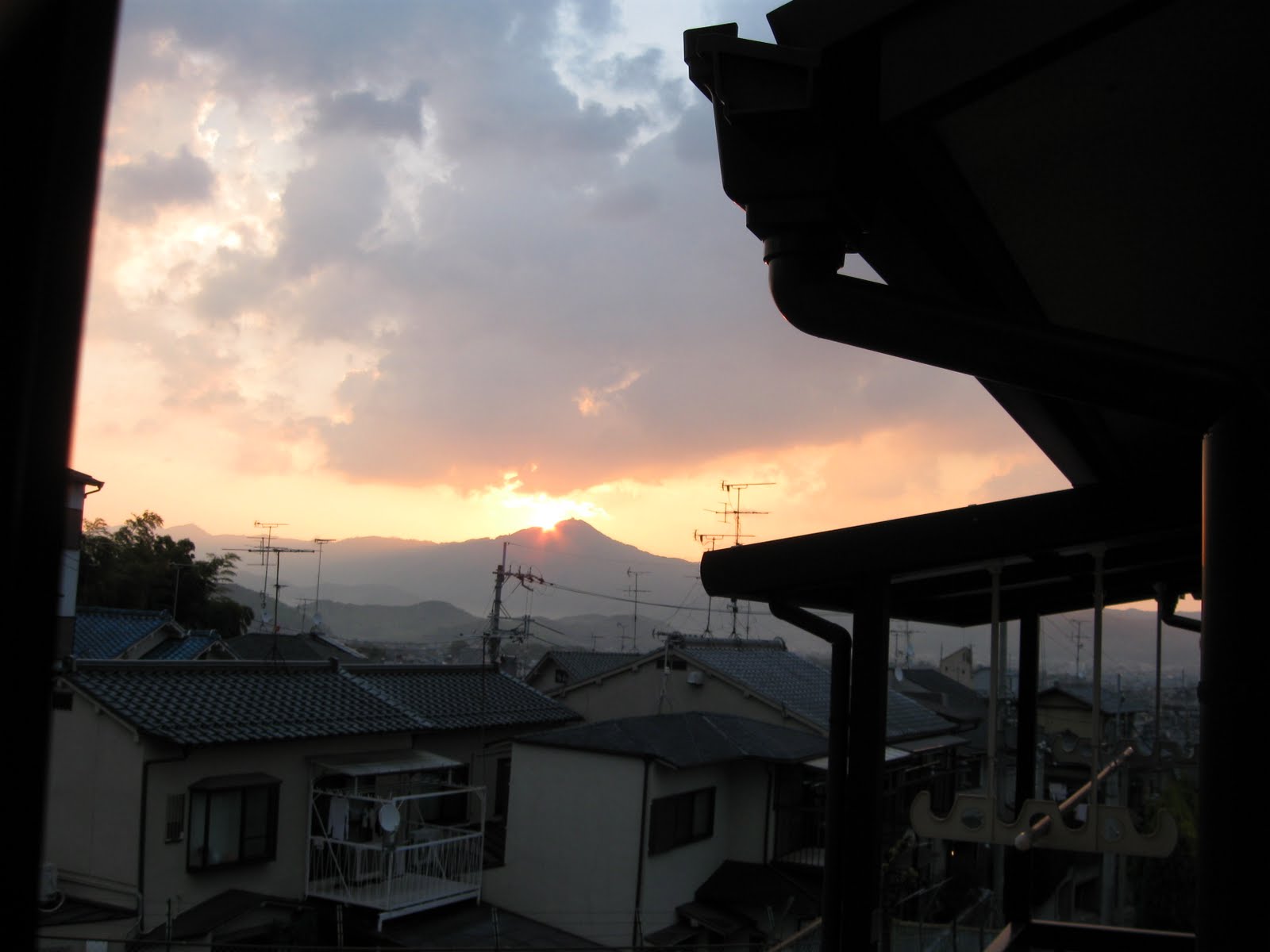
Sunrise over eastern mountain (Higashiyama), Kyoto, about 0600 hours, 29 March 2011. Sun position is moving towards the peak of high Mt. Hiei, and will keep moving toward the summer solstice position just shy of the low pair of peaks to the left (north).
Sunrise over eastern mountain (Higashiyama), Kyoto, about 0600 hours, 29 March 2011. Sun position is moving towards the peak of high Mt. Hiei, and away from the winter solstice position near the apparent intersection of the ridges to the right (south).
Monday, February 21, 2011
Love stories
[Original English:]
I teach an English literature class. The textbook is American short stories. The words are difficult so students complain. But I think they agree with me that the stories are interesting. Each has a favorite.
On a written test, I ask students to defend their choice.
One student chose a love story. When she quarrels with her boyfriend, she thinks that she might date someone else. She learned something from the story. She can think about dating someone else without actually doing it.
Stories can teach about how to live.
[Translated into Japanese:]
私は文学のクラスを教えています。教科書はアメリカの短編小説です。言葉は難しい ので、学生は文句を言う。しかし、学生は、ストーリーが面白いことを私に同意するものと思います。 それぞれ、好きなストーリーがあります。
テストでは、私はどの物語が一番好きなのかを訪ね、その理由を書くように求めた。
一人の学生は恋愛小説が好きです。彼女はボーイフレンドと喧嘩をした時には、誰か他の人と付き合いたちと思うと述べています。彼女は物語から何かを学んだと言います。彼女は実際に誰か他の人とデートするわけではありません。誰かとの人とのデートについて考えるだけです。
ストーリーは、どのように生きるべきかを教えます。
Saturday, January 29, 2011
Sketchbook project: Dolphin Log
Dolphin Log lnk.ms/K4c4j
ドルフィンログ、スケッチブックプロジェクトへの貢献
私は絵本を作っています。 私の友人リーマーズはそれを教えてくれました。彼女は また、本を作っている。 彼女は 漫画家 です。彼女はバークレー大学で美術部門 のヘッドです。 一人一人が40ページのスケッチブックに描画します。それぞれの人が本を作るため に$ 25支払っている。 私は 実話を 書いています。 25年前、私はこの実話を本にしたかったのですが、文学エージェントは、それを望みませんでした。 世界中の何百人の人がスケッチブックを作っています。 私の本は、イルカについてです。イルカ通信プロジェクトは、論争の的になった。
それはカリフォルニアの海公園にあった。野生のイルカは2年間コンピュータの発話を学んだ。我々はまた、イルカと一緒に泳いだ。そのイルカは海にかえされました。 私の本は来年の夏にギャラリーや美術館、アメリカ全土で表示されます。 来年6月18日、 サンフランシスコで展示がなされる。
[translation from original Japanese:]
Dolphin Log, my contribution to The Sketchbook Project
I'm making a picture book. Lee Marrs, my friend, told me about the Brooklyn Art Library’s “Sketchbook Project.” She is also making a book. She is a cartoonist. She is the head of an art department at Berkeley. Draw a sketch on each of forty pages. To do this people are paying $25 each. I am writing a true story. In the 1980s, I wanted to publish this picture book but literary agents did not want it. I make a sketchbook and so do thousands of people around the world.
My book, DOLPHIN LOG, is about dolphins. Dolphin Communication Project had become controversial. It was at a sea park in California. Wild dolphins learned computer speech for two years. We also swam with dolphins. The dolphins were then released to the sea. All the Sketchbooks will appear in the US this year in museums and galleries. 18 June 2011, the Sketchbook exhibition will be in San Francisco.
Friday, December 24, 2010
Sunrise 25 December 2010 (within a week of equinox)
Thursday, December 9, 2010
Wild boar on campus
Wild boars
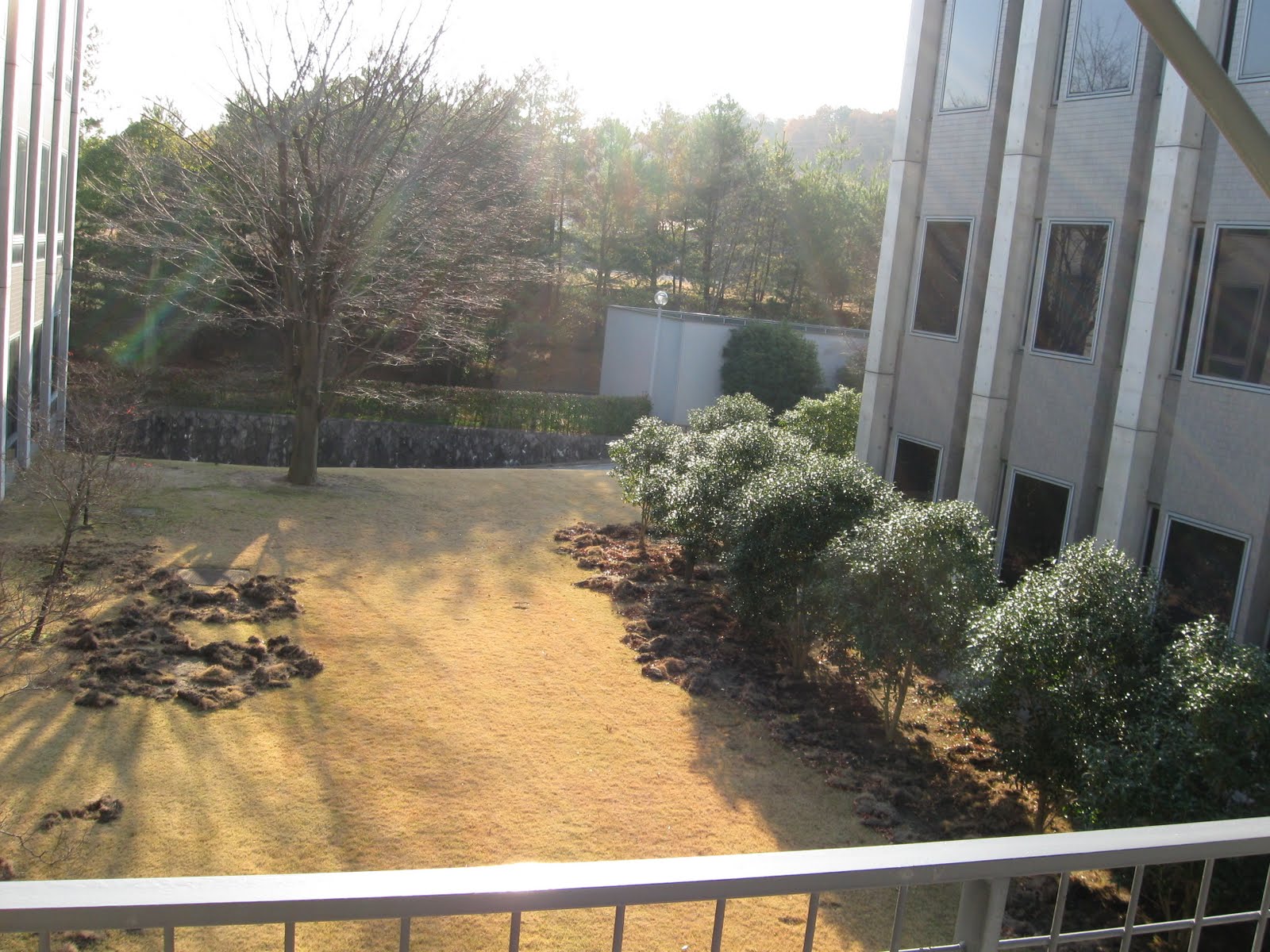
Under the bushes, the lawn had been torn up. It was neat, I thought. I imagined a gardening project.
“Do you think the wild pigs did that?” a fellow teacher asked.
“Wild pigs? Here? No,” I replied.
A week later, the other teachers showed me a notice in Japanese: “There are wild pigs. Danger.” The flyer was on all the tables in the lobby.
In the teachers’ room, we said, “There are wild boar.”
We looked out the window. The lawn was still gouged.
“Really? Wild pigs. I want to see them,” I said.
All day, and the next week, I enjoyed looking at where the boars had dug. Afternoons are warm and quiet, but the evenings here are not calm, I thought.
The campus is in Osaka, a half hour bus ride uphill from the train station. The bus route winds through fields and forests. By the end of the route, nobody is on the bus except students. The campus is stark cement buildings.
The native inhabitants here are not students.
[Translation into Japanese from original English:]
イノシシ
茂みの下で、草が切り裂かれていた。ちょっと きれい だと 思いました。
私は誰かが庭を ガ ー デ ニ ン グしたのだと思いました。
"あなたは イノシシがやったと思いますか?" と 友達は 聞きました。
"イノシシですか?ここでですか?いいえ、"私は答えた。
一週間後、先生たち は私に日本語での通知を示した。ロビー内のすべてのテーブル
にあった: イノシシ が 来ますので、 あぶない。 先生の部屋で、 "それは イノシシ
だ"と彼らは話した。
窓の外を見た。 また 草がくりぬかれた。
"本当ですか? 猪 。私は猪を見たい。"と 私は言った。
一日中、私は来週も猪が作った草をみることができると、 うれしい気持ちでした。 昼間は 静かで
暖かった が、夜は 静かではなかった と 思います。
キャンパスは大阪にある、三十分 ぐらい バスに乗って駅から、 山の上 です。
バスの路は フィールドや森林を通っています。終点ではバスは、 学生だけになっています。
キャンパスは セメントの建物。
ここで の元の住民 はイノシシで、学生ではない。
Subscribe to:
Posts (Atom)